



холодный реверсивный стан
/Cold Rolling Process An In-Depth Look Cold rolling is a critical manufacturing process widely utilized in various industries to create materials with specific properties and dimensions. This process involves the deformation of metal at room temperature, which distinguishes it from hot rolling, where the metal is heated above its recrystallization temperature. Cold rolling not only enhances the mechanical properties of the material but also provides a smoother surface finish and tighter tolerances, making it essential for producing high-quality metal products. The Mechanics of Cold Rolling The cold rolling process typically involves passing metal sheets or strips through a pair of rollers. These rollers exert pressure on the material, reducing its thickness while simultaneously increasing its length. The process is characterized by several key steps, including pickling, rolling, annealing, and finishing. 1. Pickling Before the rolling process begins, the metal surface must be cleaned of oxides, scale, and other impurities that may interfere with the rolling operation. This is achieved through pickling, which involves immersing the metal in a solution of acid that removes unwanted materials and reveals a clean, reactive surface. 2. Rolling After cleaning, the metal is fed into a cold rolling mill. As the material passes through the rollers, it undergoes plastic deformation. The rollers may be arranged in various configurations, including tandem mills, where multiple stands are used in sequence to achieve significant reductions in thickness. 3. Annealing Cold working the metal increases its strength through strain hardening; however, this also makes the material more brittle. To relieve stresses and restore some ductility, the rolled material is often subjected to annealing, a heat treatment process where the material is heated to a specific temperature and then cooled. This process improves the overall workability of the metal for subsequent processing. 4. Finishing Finally, after annealing, the material undergoes finishing processes. These may include further surface treatments such as polishing or coating to enhance the aesthetic and functional properties of the metal. Finishing processes also ensure that the material meets the required specifications and quality standards. Advantages of Cold Rolling Cold rolling offers various advantages that make it a preferred choice in many manufacturing applications processo di laminazione a freddo - Improved Mechanical Properties Cold-rolled materials typically exhibit higher yield strength and tensile strength compared to their hot-rolled counterparts. This is due to the strain hardening that occurs during the rolling process. - Enhanced Surface Finish The process yields smoother surfaces, which are often required for aesthetic purposes or additional manufacturing processes such as painting, coating, or welding . - Dimensional Accuracy Cold rolling allows for tighter tolerances in thickness and flatness, which is essential in industries requiring precise specifications, such as automotive and aerospace. - Increased Resistance to Wear The hardened nature of cold-rolled materials makes them more resistant to wear and tear, extending their lifespan in various applications. Applications of Cold Rolling Cold rolling is widely used across different sectors, including automotive, aerospace, construction, and manufacturing. In the automotive industry, cold-rolled steel sheets are used to manufacture car bodies, structural components, and various other parts that require strength and precision. The aerospace industry relies on cold-rolled aluminum and alloys for aircraft components where weight savings and performance are critical. Moreover, the construction industry utilizes cold-rolled products for structural applications, including beams, columns, and reinforcements. In manufacturing, cold-rolled steel is often employed in producing everything from appliances to tools, owing to its superior characteristics compared to hot-rolled options. Conclusion Cold rolling is an essential manufacturing process that plays a crucial role in producing high-quality metal products with enhanced mechanical properties and surface finishes. The ability to achieve tight tolerances and superior strength makes it invaluable across various industries. As technology advances, cold rolling techniques and equipment continue to evolve, promising further improvements in efficiency, sustainability, and product quality. Understanding the fundamental aspects of cold rolling helps industries leverage this process to meet the growing demands of modern manufacturing while maintaining high standards of quality and performance.

We have successfully executed over 500
projects around the world,
many first-of-their-kind
research projects and products in China, including
We have successfully executed over 500
projects around the world,
many first-of-their-kind
research projects and products in China, including
-
2004
The 1st hydraulic AGC system for hot rolling of ribbon steel
-
2006
The 1st AFC system used for 1450mm skin pass mill
-
2009
The 1st 5-stand tandem line with 2-stand POR & Uncoiler for 650mm ribbon steel
-
2012
The 1st reversing mill for 1380mm strip
-
2016
The 1st soft-rolling system used in skin pass mill
-
2019
The 1st fully automated medium-width tandem cold rolling mill
-
2021
The 1st 5000KN Twin-stand double skin pass mill
-
2022
The 1st coupled pickling line & tandem cold mill with two modes - big roller & small roller
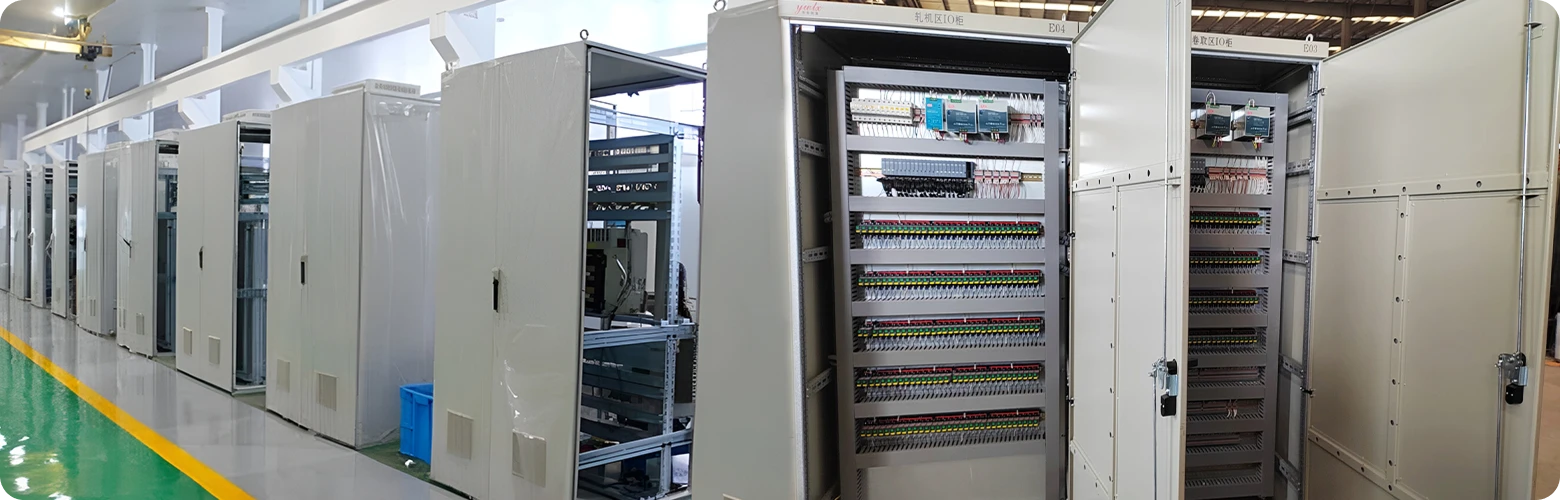
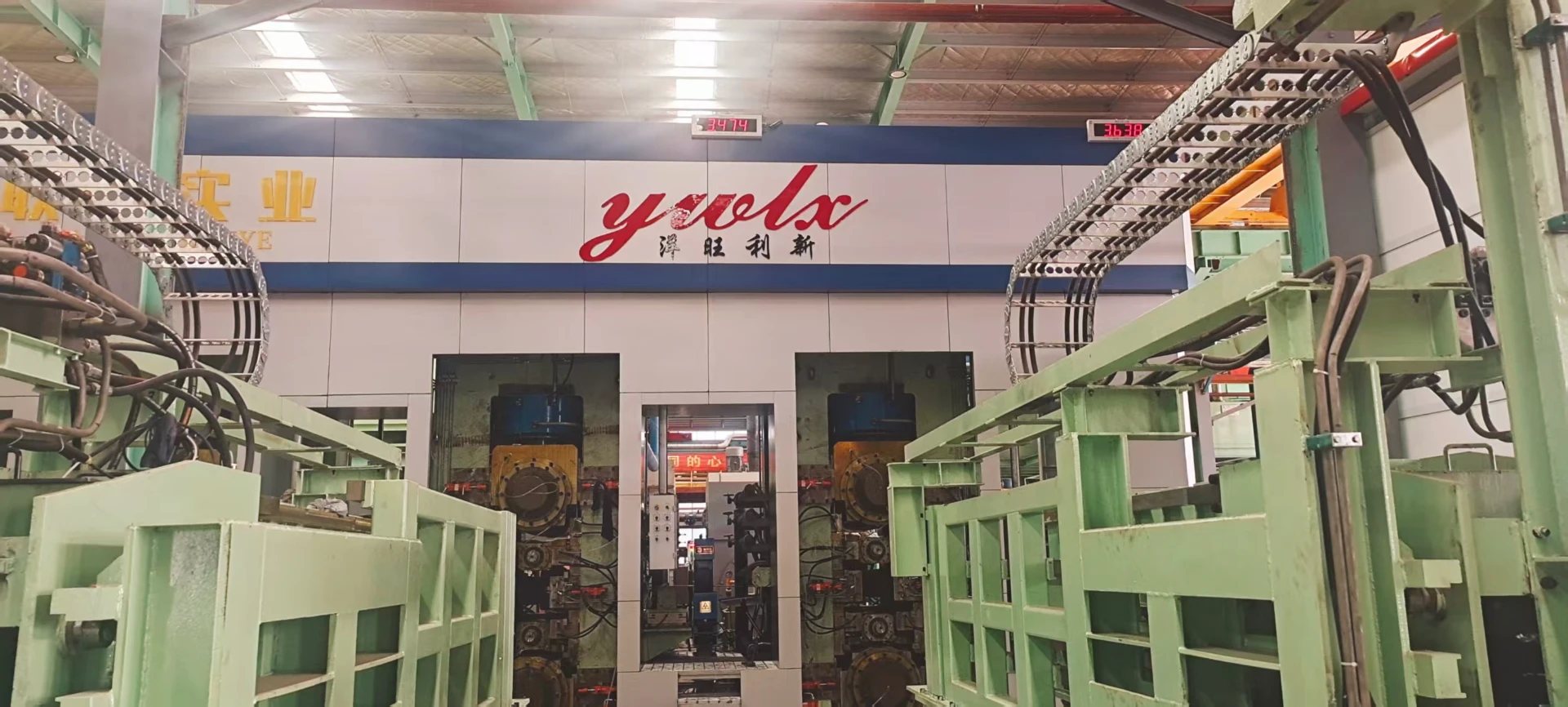

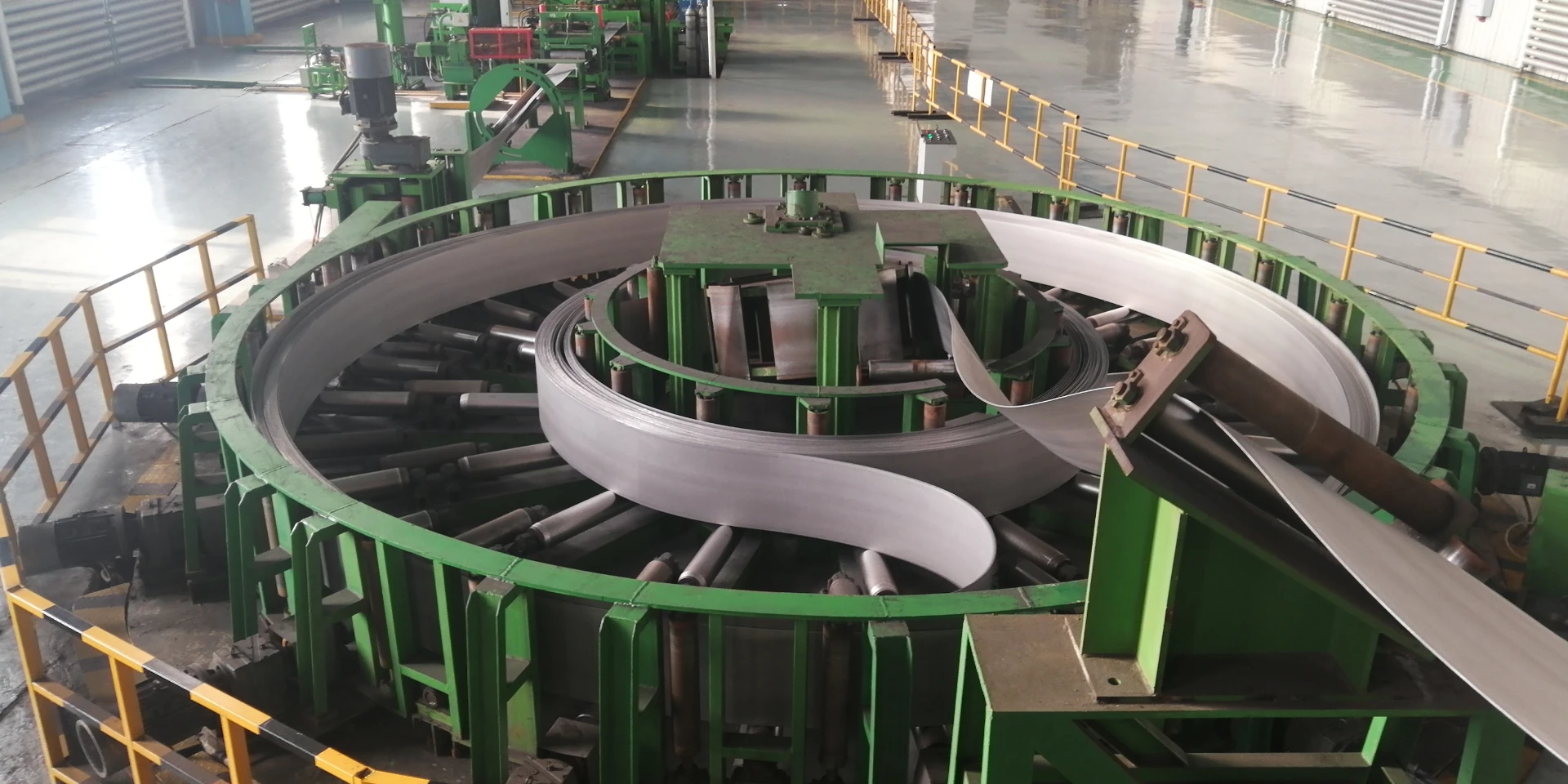

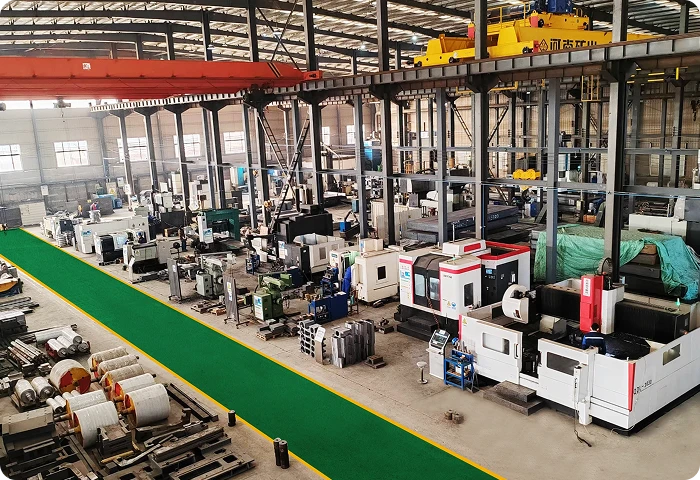
Yang Wang Li Xin operates a state-of-the-art facility over 66,000 square meters,and our manufacturing facility is fully equipped with high-tech machinery and high-capacity cranes. This enables us to handle large work pieces measuring 4.5m in width, 10m in length, and 1.5m in height, guaranteeing our capacity to produce 1800mm skin-pass mills and 1450mm rolling mills. The individual piece can weigh up to 100 tons.

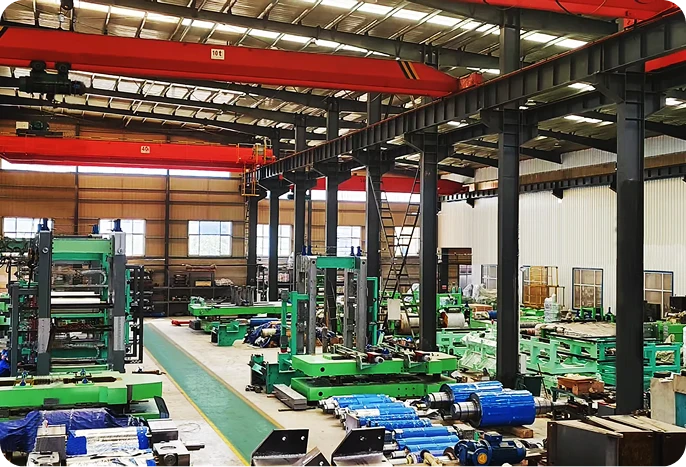

Quality is fundamental to the enterprise survival. We have established a comprehensive and meticulous quality management system and have successfully obtained ISO14000 certification. Starting from the design source, it supervises the entire production cycle, including design, procurement, processing, assembly, in-factory testing, installation, and online commissioning. The workshop is equipped with measuring tools like vernier calipers, spectrometers, hardness testers, and ultrasonic flaw detectors. They are used to check materials and control tolerances to ensure the final equipment meets or exceeds requirements. All products have a unique code, This enables the easy identification and traceability of the equipment components and ensures full control of quality.


-
 The Power of Automatic Gauge Control in Modern Rolling MillsIn the field of modern metallurgical engineering, achieving precise thickness control during the rolling process is one of the most critical challenges. As global demand grows for high-quality steel and non-ferrous metal products, the need for precision, consistency, and automation in rolling mills has never been greater. One of the most important technologies enabling this control is the AGC syst
 -
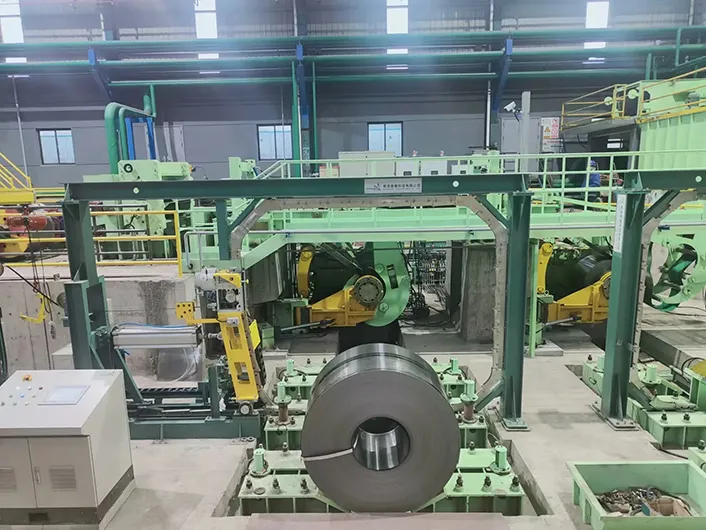 The Application of Skin Pass Mill in Galvanizing LineIn the modern steel manufacturing and surface treatment industry, the skin pass mill plays a crucial role, especially in the galvanizing line. A galvanizing line is designed to coat steel sheets with a layer of zinc to enhance their corrosion resistance. The skin pass process , which is an integral part of this line, significantly improves the quality and appearance of the galvanized products. The
 -
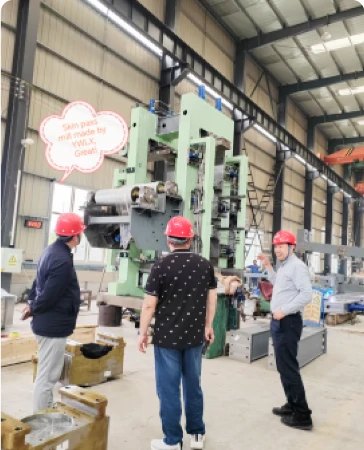 strip millStrip mills have revolutionized the way steel is produced, offering a more efficient and uniform means of manufacturing steel products. In the manufacturing world, the strip mill process has stood out due to its ability to produce steel more economically without compromising on quality. This article delves into the intricacies of strip mills, providing insights from industry experts and real-world


